
I Thought He Had Changed. Maybe I Had: relational wisdom part 2
/Relationships evolve alongside the people who are in them. Have you ever heard someone say, “I outgrew that relationship”? Usually what they mean is that somewhere along the way, one person's growth, choices, or values began moving in a significantly different direction from the other person's.
That isn't necessarily a bad phrase or even a bad thing. As I wrote in my last blog, the patterns we repeatedly choose will naturally align us with some people and distance us from others. We have to pay attention to the consistent patterns of people's current behavior—good or bad—and adjust our relationships accordingly. But you know what I would love to hear more often than “I outgrew that relationship”? “I grew INTO better relationships.”
That requires personal growth, but it requires something else too: a willingness to change the narrative we carry about another person when their current behavior no longer supports our old conclusions about them.
I think the first time that lesson really hit me was in early adulthood. My senior year in college, our team got a new head coach. We all really liked our previous coach, and this new coach was different in a lot of ways. Admittedly, at that stage in my life, different often meant “bad” or “wrong.”
Some of his changes were good and moved our training in the right direction. But if I'm remembering that season accurately, there were far more negative stories we told ourselves, and each other, about him. We complained about the training. We complained about the outcomes. We complained about how he said something. We complained about what he didn't say or didn't do. In our college minds, somehow it all came back to him. It was all his fault.
At the end of that season, my final season, he gave each senior a copy of Dr. Seuss's Oh, the Places You'll Go! with a handwritten note inside. Then he said a kind word about each of us in front of the team.
I can't remember his exact words about me, but I remember the substance: “A word that comes to mind with Julie is coach. I always know when Julie is on the bench because I'll be ready to give a direction, and I don't have to. It's already being said.”
My teammates laughed in agreement. I remember being unsure whether it was a full complement or a light slight. Looking back, I can see that some of my reaction was probably me wrestling with what it meant to be a vocal young woman finding her place in the world. But regardless of how I received it, he meant it. And it was indeed factual.
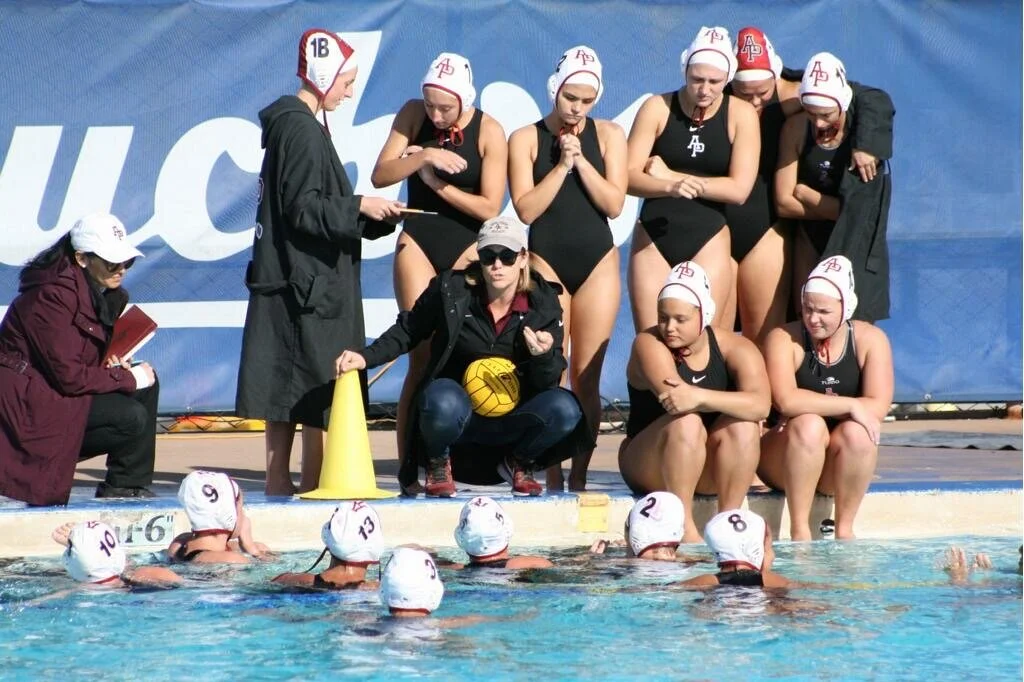
Fast-forward about four years. I was hired as the head coach of a school that was slated to become a conference opponent of his. I was young, inexperienced, and stepping into the same profession I had spent my college years evaluating from the athlete's side.
And this coach shocked me. He was quick, sincere, and generous in his support. He was incredibly willing to help me, and it wasn't just talk. I remember emailing him a question and receiving a quite lengthy and thoughtful response. He gave me his time. He shared what he knew. And maybe more surprising to me than anything else, he seemed genuinely excited for me. I remember telling some of my former teammates, “This seems like a totally different guy!”
Had he changed? Maybe.
Had I changed? Definitely.
In those four years I had moved beyond college, taught in high school settings, grown in my marriage, served in ministry, and learned a lot more about engaging with people from different walks of life. I had accumulated experiences that changed the way I saw people. I'm sure he had changed too. He got married, became a father, and accumulated four more years of experience coaching young women. Life was shaping both of us.
But as I watched the consistency of his support during my first season of coaching, another possibility became harder to ignore: maybe he hadn't changed as much as I thought he had. Maybe I was finally seeing more of who he had been all along.
Maybe at 20 years old I was too self-focused to see him clearly. Maybe I wanted my senior year to look a certain way, and because he represented a change to that vision, he became an easy target for my frustration. Maybe the story my teammates and I had repeatedly told about him had become so familiar that we stopped questioning whether it was actually true.
Now, I was seeing new data. He encouraged me. He helped me. He gave generously of his time. (in truth he did all of this as a coach too- but I expected it much more in that relationship). He celebrated my opportunity. And then he kept doing those things. His actions weren't matching the narrative I had carried about him.
I had a choice: defend my old story or pay attention to the person standing in front of me.
That experience with my coach was only one realization among many, but I think it was the first significant one of my adult life. And life wasn't finished teaching me. In my first few years as a head coach, I became the “new coach” for my own group of athletes and came face-to-face with what culture change can feel like for an energetic, fast-moving leader. It can be harsh. Suddenly, I had athletes telling stories about me. They had opinions about my decisions, my communication, my training, and what they thought I should or shouldn't be doing. I was experiencing leadership from the other side.
At nearly the same time, I became a mother of four children in two calendar years. My life became fuller and more complicated than anything the athletes standing on my pool deck could see. Sometimes I wonder whether the athletes I coached during those years ever thought about what my life looked like when I left practice. After all, I didn’t think very much about my coaches' lives outside of practice either.
Age has a funny way of introducing us to the humanity of people we once experienced primarily through the role they played in our story. Coach. Parent. Boss. Teacher. Pastor. Friend. They were never merely characters in our story; they had a story too. Part of growing up is developing enough perspective to recognize that what we experienced of someone may have been real without being the whole picture.
This is why we have to remain open to our own growth while also giving other people room to grow. Sometimes people genuinely change. They mature, heal, take responsibility, learn from failure, become more generous, or develop wisdom they didn't have before. Other times, like with my coach, we may discover that the person didn't change nearly as much as our ability to see them did.
Either way, new patterns should cause us to reconsider old narratives.
As I wrote in my last blog, patterns matter. We shouldn't build relationships around who we hope people will become; we should pay attention to the consistent patterns they actually demonstrate. If someone's current patterns reveal that they are less healthy or trustworthy than we once believed, wisdom requires us to adjust our boundaries accordingly. But that principle has to work in the other direction too. If someone's current patterns consistently reveal greater maturity, character, generosity, humility, or health, we have to be willing to adjust our narrative accordingly.
That leaves me with a question I think is worth asking:
What if someone in your life has been giving you new data, but you're still interpreting them through an old story?
Maybe it's a parent you decided years ago would never understand you. Maybe it's a former leader whose motives you assumed you understood. Maybe it's a sibling who has matured, a friend who has taken responsibility, or even a spouse who has been working to change while you continue to interpret every action through the lens of an older version of them.
Look at the current patterns. Not one good interaction. Not one apology. Not one bad day either. Look at what has been consistently true over time. If those patterns confirm the old story, don't ignore them. Adjust your boundaries and actions accordingly. But if the patterns no longer support the story you have been telling yourself, have the humility to admit that too.
We cannot ask people to give us grace for who we are becoming while refusing to extend that same grace to them. Give people room to grow, pay attention to who they are showing themselves to be today, and when the pattern changes, be willing to change the story.









Learning is living and I like living, so I admit I will always be in process. Here is a little something I am learning this week.